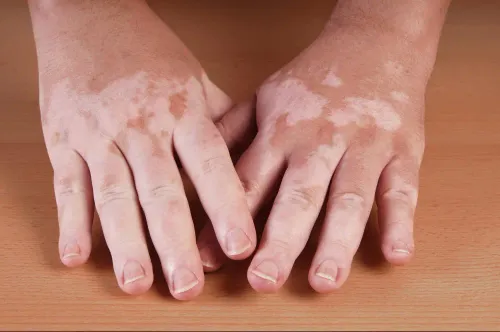
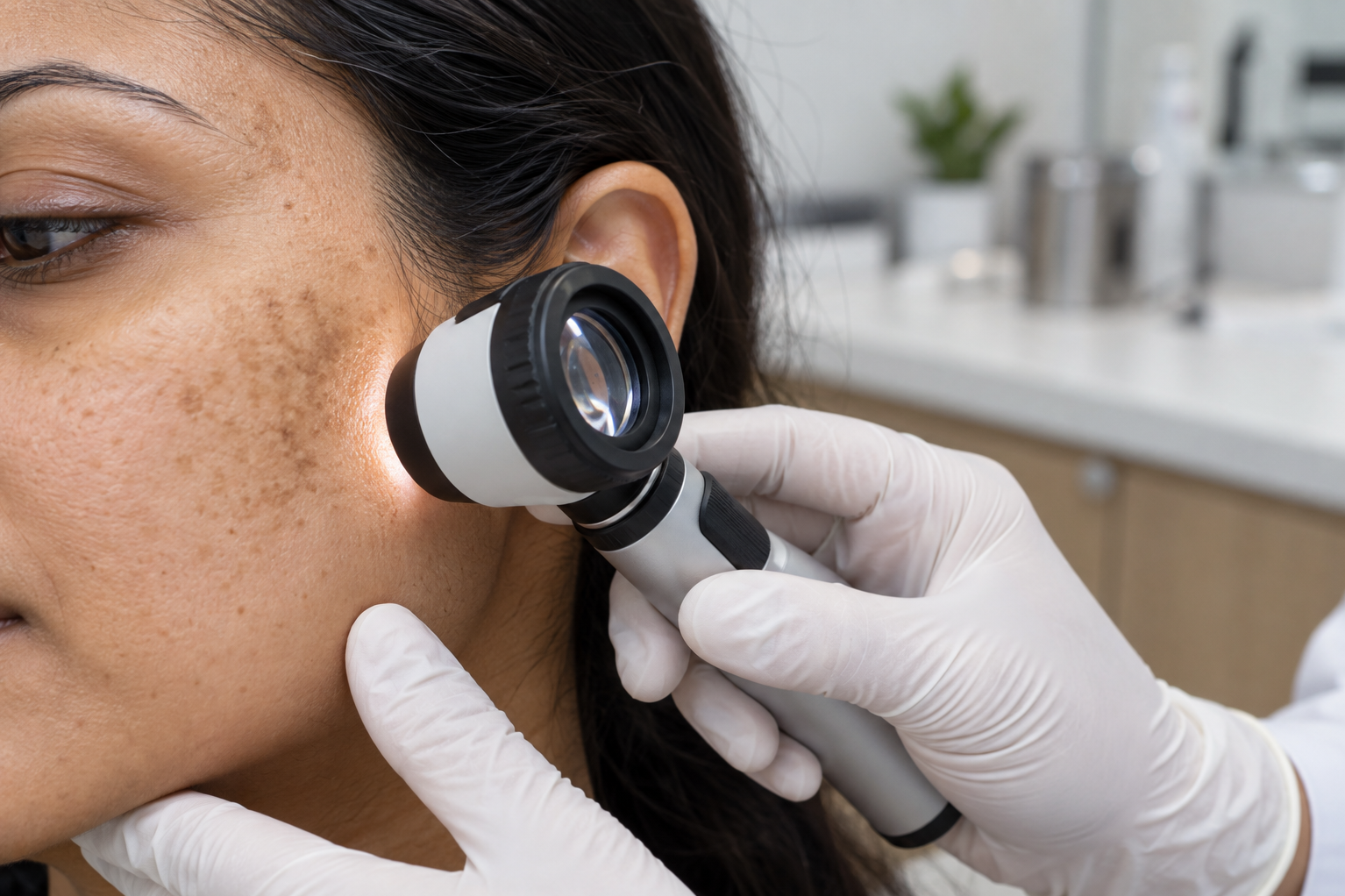
'Pigmentation' is one of the broadest terms used in skin care. It may describe post-acne marks, melasma, sun-related spots, pigmentation following inflammation, or several other conditions.
This matters because Pigmentation Treatment in Mumbai should not begin with the assumption that every dark patch will respond to the same cream, peel, or laser.
Different Pigmentation Can Look Similar
Melanin gives skin its colour, and many biological processes can increase or alter pigment production.
A dermatologist first considers where the pigmentation appears, when it started, how it has changed, and what preceded it.
For example, pigmentation following acne or another inflammatory rash has a different history from symmetrical facial pigmentation associated with melasma.
Some pigmentation may also be worsened by irritation from products intended to lighten it.
Why Sunlight Is Only Part of the Story
Ultraviolet exposure can worsen several pigmentary conditions, but visible light and heat may also be relevant in selected conditions such as melasma.
For people living in Mumbai, daily exposure does not occur only during a beach visit or outdoor holiday. Commuting, walking between buildings, driving, and routine daytime activities contribute to cumulative exposure.
Consistent photoprotection may therefore form an important part of pigmentation management.
Creams Versus Chemical Peels
Topical treatment can be useful for many pigmentary problems. Different ingredients work through different mechanisms, and treatment strength needs to be balanced against the possibility of irritation.
Chemical peels can provide another option for appropriately selected patients. They involve controlled application of chemical agents to the skin and vary considerably in depth and formulation.
Neither category is automatically 'better.'
The decision depends on diagnosis, skin type, previous treatments, sensitivity, and the depth or nature of pigmentation.
What About Lasers and Energy-Based Treatments?
Technology can be useful for selected pigmentary concerns, but lasers should not be treated as universal pigmentation erasers.
Different devices interact with skin in different ways. Incorrect patient selection or overly aggressive treatment may increase the risk of irritation or post-inflammatory pigment changes, particularly in pigment-prone skin.
Before undergoing a laser or device-based procedure, useful questions include:
- What is the diagnosis?
- Why is this device suitable for it?
- What improvement is realistically expected?
- Could pigmentation temporarily darken?
- What aftercare is required?
- Is maintenance likely?
The quality of the assessment matters at least as much as the technology being offered.
Beware of Unsupervised Lightening Products
Unlabelled or inappropriate skin-lightening combinations can cause problems when used for long periods.
Potent ingredients may temporarily make pigmentation appear lighter while creating skin thinning, irritation, acne-like eruptions, or other complications.
A product should not be considered safe simply because it produced rapid visible change.
Pigmentation Often Requires Maintenance
Some pigmentary conditions have a tendency to recur, particularly when triggers remain present.
This does not necessarily mean treatment has 'failed.' It means long-term control may involve maintenance skin care and consistent sun protection after initial improvement.
Dr. Akshay Kishor's dermatology and cosmetology practice in Mumbai evaluates pigmentation according to its pattern and likely cause before selecting medical or procedural options.
Know What You Are Treating
Patients frequently arrive with several concerns described collectively as pigmentation: brown patches, acne marks, uneven tone, and textural changes. Separating these problems is valuable because one treatment may improve one feature without substantially changing another.
Good pigmentation care is therefore diagnosis-led rather than procedure-led.
Before comparing peels, creams, lasers, or popular online routines, identify the condition behind the colour change. That single step can make treatment safer, expectations clearer, and the overall plan much more focused.
Keywords