
When hair density starts decreasing, advertisements can make every treatment sound essential. Serums, supplements, medications, injections, devices, and procedures are frequently promoted together, leaving patients unsure where to begin.
Choosing Hair Loss Treatment in Mumbai becomes much simpler when one principle comes first: treatment should match the type of hair loss.
Pattern Matters More Than the Product
Progressive thinning around the temples, crown, or central scalp may suggest pattern hair loss, while sudden diffuse shedding may indicate a different process. Clearly defined bald patches raise another set of possibilities.
A scalp that is red, painful, heavily scaled, or developing areas of scarring needs particular attention because inflammatory conditions can damage follicles.
Before comparing treatments, a dermatologist may therefore assess:
- Distribution of thinning
- Hair-shaft characteristics
- Scalp condition
- Duration and speed of progression
- Family history
- Recent illness or major stress
- Medications
- Nutritional and hormonal factors where relevant
This evaluation helps separate treatments with a reasonable role from options unlikely to address the diagnosis.
Medical Treatment Versus Cosmetic Support
Some treatments are intended to influence follicular activity or the biological process responsible for hair loss. Others primarily improve the appearance, texture, or manageability of existing hair.
Both can have a place, but they are not interchangeable.
A volumising shampoo, for example, may make hair appear fuller temporarily without changing progressive follicular miniaturisation. Similarly, an oil may improve lubrication of the hair shaft without treating an underlying autoimmune or inflammatory disorder.
Understanding the objective of a product prevents unrealistic expectations.
Where Do Procedures Fit?
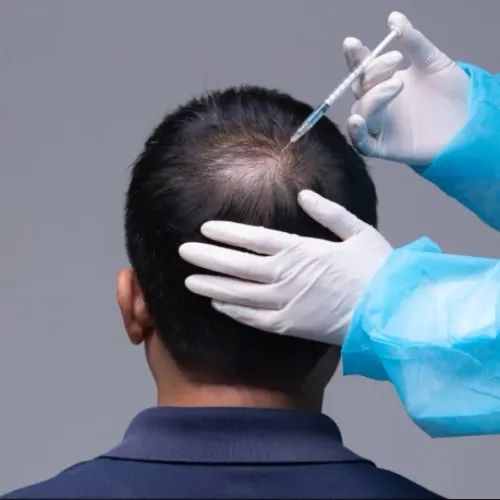
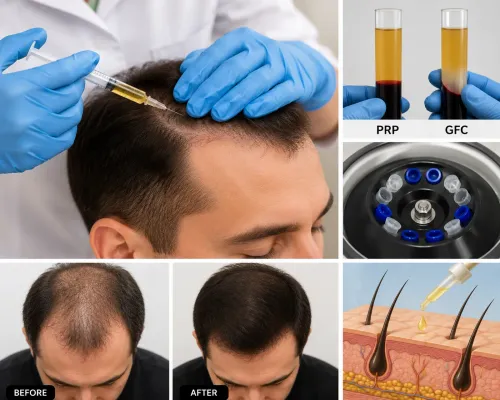
Procedural hair treatments are increasingly popular in Mumbai and other major Maharashtra cities. Their suitability depends on diagnosis, degree of hair loss, available evidence, medical history, and expectations.
Procedures should generally be viewed as part of an overall strategy rather than an automatic substitute for medical management.
Patients evaluating a procedure can ask:
- What type of hair loss do I have?
- Why is this procedure suitable for that diagnosis?
- What evidence supports its use?
- How many sessions might be considered?
- What maintenance could be required?
- What are the limitations and potential adverse effects?
- How will progress be documented?
Clear answers are more valuable than dramatic before-and-after photographs alone.
Why Results Take Time
Hair follicles operate on a biological cycle measured in months rather than days.
Even when a treatment is appropriate, visible improvement may take time. Some therapies may initially alter shedding patterns, and changes in density can be difficult to judge from day-to-day observation.
Standardised photographs taken at intervals can provide a more objective comparison.
Consistency also matters. Frequently switching between treatments because no visible improvement appears within a few weeks can make it difficult to determine whether any approach has been given a fair trial.
Is Hair Transplantation the Answer for Everyone?
No.
Hair transplantation can be useful for appropriately selected patients, but candidacy depends on factors such as diagnosis, donor hair availability, progression of hair loss, age, scalp health, and realistic expectations.
Active inflammatory or certain scarring conditions require careful assessment. A transplant also does not necessarily prevent continuing loss of non-transplanted hair.
A More Useful Way to Choose
Instead of asking, 'What is the best hair-loss treatment?' ask, 'What treatment has the strongest rationale for my particular diagnosis?'
At Dr. Akshay Kishor's dermatology and cosmetology clinic in Mumbai, assessment can help establish the likely type and stage of hair loss before medical or procedural options are considered.
A credible treatment plan should explain both what a treatment can potentially achieve and what it cannot. It should also provide a sensible timeframe for reassessment.
Hair-loss decisions become less confusing once marketing claims are removed from the equation. Diagnosis, evidence, safety, consistency, and realistic expectations provide a far more dependable basis for comparing treatment options.
Keywords