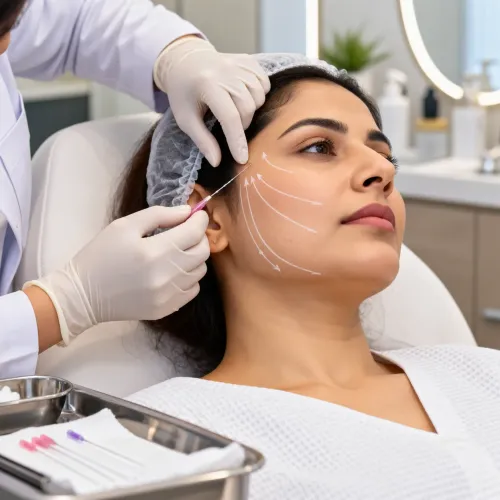
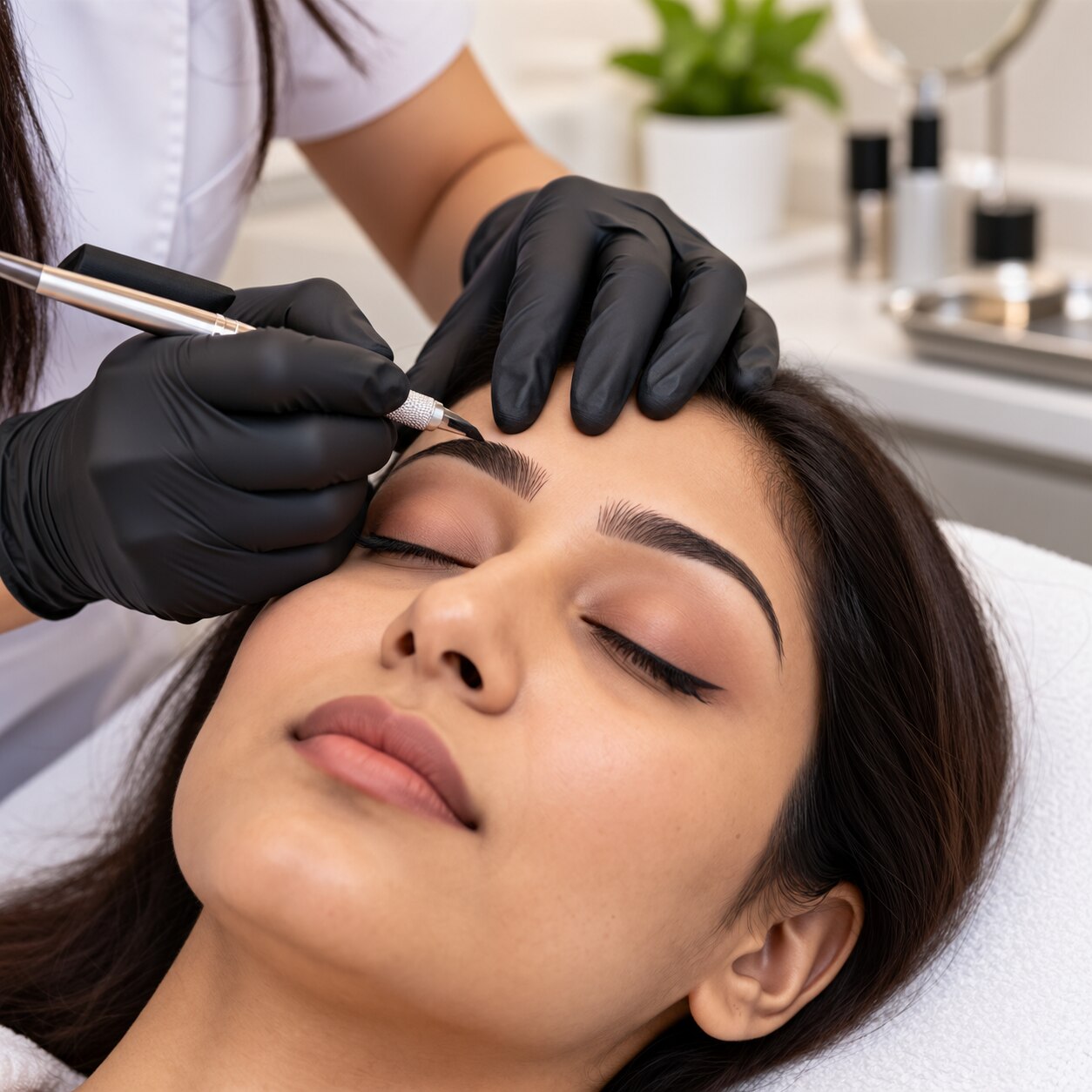
You need to know what will happen before pigment touches your skin, from the medical questions and brow drawing to the final symmetry check. By the end, you will know what to bring, what to approve, how the main techniques differ, and when postponing treatment is the safer choice.
Key takeaways
- Share allergies, medicines, skin conditions, and previous cosmetic tattooing.
- Confirm the brow shape, pigment colour, technique, and touch-up plan before treatment.
- Expect mapping, numbing, pigment implantation, cleaning, and aftercare instructions.
- Postpone treatment after recent peels, active skin irritation, or suspected infection.
What happens during the consultation before any pigment is implanted?
A proper microblading consultation in Mumbai starts with your medical and cosmetic history, before any pigment is implanted. Tell the practitioner about:
1. Previous eyebrow tattoos, pigment or anaesthetic reactions, allergies, keloid or hypertrophic scarring, immune problems, diabetes, medicines that increase bleeding, pregnancy, or breastfeeding.
2. Eczema, psoriasis, acne, dermatitis, an open wound, infection, or any unexplained rash near the brows. Active inflammation is a reason to postpone treatment because it can worsen the skin condition and obscure signs of infection.
3. Sudden, patchy, or progressive eyebrow loss. The practitioner should assess your skin type, existing brow hair, asymmetry, facial proportions, age-related changes, and scarring. Microblading does not treat alopecia areata, thyroid disease, nutritional deficiency, or follicle damage, so dermatological assessment comes first when hair loss is unexplained.
Bring photographs of preferred shapes, details of earlier cosmetic tattooing, your medication list, and known allergies or skin conditions. Discuss arch height, thickness, density, colour, maintenance, and whether you wear makeup daily.
Ask to see the proposed design while sitting upright. If it looks harsh against your natural brow, facial proportions, age, or usual makeup style, request a more conservative shape. A patch or spot test may be offered, but a negative result cannot rule out a delayed reaction, even years later.
What happens step by step during the eyebrow microblading appointment?
Expect the appointment to take several hours, not just the time spent placing pigment. The eyebrow microblading process in Mumbai includes preparation, design approval, numbing, implantation, symmetry checks, photographs, and aftercare instructions.
1. The practitioner cleanses and prepares the brow skin, then measures your facial proportions and existing brows. Brow mapping establishes the start point, arch, tail, width, and density.
2. They draw the proposed outline and compare both sides. Sit upright before approving it; do not approve the shape while lying back or rely on a verbal description. Ask for adjustments until the design looks balanced from your normal viewing position.
3. Remember that the outline shows the intended design, not the final colour or healed result. Removal is harder than application, so conservative shape and colour choices matter during an eyebrow microblading treatment in Mumbai.
4. The practitioner selects pigment to suit your natural brow hair, skin tone, and preferred softness. Where appropriate, topical anaesthetic is applied and left in place long enough to work.
5. Ask to see a new sterile needle or cartridge opened for you. A handheld tool with very fine needles makes superficial, hair-like incisions and places pigment inside them.
6. The practitioner works in passes, wipes away excess pigment, checks symmetry, and adds only the strokes needed for balance. They should photograph the result and give written aftercare instructions before you leave. Confirm the clinic’s exact schedule when booking.
How do microblading, nanoblading, powder brows, and combination brows differ?
Microblading uses a handheld blade or manual fine-needle tool to place individual superficial strokes that imitate hairs. It suits a soft, separated hair-stroke effect, but it does not transplant new hair or stimulate follicles. During an eyebrow microblading treatment in Mumbai, confirm the tool and pigment depth rather than relying on the technique name.
| Option | Equipment and pigment placement | Typical finish and suitability |
|---|---|---|
| Microblading | Handheld blade or manual fine-needle tool; superficial individual strokes | Soft, separated hair-like strokes; suitable for a natural-looking brow, not new hair growth |
| Nanoblading | Usually a very fine needle making finer strokes; terminology is not standard | Delicate hair strokes; ask whether the tool is handheld or machine-based and how deeply pigment is placed |
| Feather strokes | Describes the visible stroke pattern, not one universal device | Ask whether strokes are manual, machine-made, or combined with shading |
| Powder brows | Machine with repeated pigment placement | Filled, makeup-like or ombré finish; useful for sparse brows or regular brow-makeup wear |
| Combination brows | Hair strokes at the front with machine shading through the body and tail | Textured fronts with a more defined, filled appearance |
Eyebrow micropigmentation in Mumbai is the broader category and includes machine-based and hair-stroke methods. Compare equipment, pigment placement, healed photographs, maintenance, and suitability for your skin. Oily skin, large pores, previous pigment, or a preference for a defined makeup look can change the recommendation. Ask to see healed results, not only freshly completed brows.
What will you feel, see, and do after the brows are finished?
Immediately after the eyebrow microblading process in Mumbai, expect pressure, scratching, or brief stinging—not a deep incision. Topical anaesthetic can reduce discomfort, but it does not guarantee numbness. Redness, tenderness, mild swelling, darker colour, thicker-looking strokes, sharp edges, crusting, and flaking can appear.
Fresh pigment and surface irritation make brows look much darker than the healed result, so do not judge colour during the first days.
- Follow the practitioner’s written aftercare instructions.
- Keep unapproved creams, makeup, cleansers, and skincare products away from the area.
- Never pick crusts: removing them can pull out pigment and increase infection or scarring risk.
- Seek medical advice for worsening pain, spreading redness, pus, fever, marked swelling, or a persistent inflamed mark. Do not assume every change is normal healing.
- Attend a review or refinement appointment around four to eight weeks, after healing rather than on a rushed date. Pigment can lighten or look uneven, and small gaps may need correction.
Semi-permanent pigment fades at different rates with skin type, sun exposure, skincare products, technique, and pigment. The eyebrow microblading treatment in Mumbai can still cause allergic reactions, granulomas, keloids, pigment migration, colour change, or infection after an apparently successful appointment. A negative patch test cannot rule out delayed allergy.
When should you postpone treatment, and what should you ask the practitioner?
Postpone the appointment if the brow area has an active infection, open wound, significant dermatitis, acne flare, or unexplained inflammatory rash. Treating inflamed skin can worsen the condition and make infection harder to distinguish from normal healing.
A proper microblading consultation in Mumbai or eyebrow micropigmentation in Mumbai should include direct questions about safety, not just the advertised technique:
- Who will perform the treatment, and what device and pigment method will they use?
- Will you see a new sterile needle or cartridge opened for you?
- How are gloves, skin preparation, single-client equipment, pigment cups, and instruments handled?
- What prevents pigment and instruments from being reused or cross-contaminated?
- How will previous cosmetic tattooing change the design, and is removal needed first?
- How will the clinic record the pigment, treated area, consent, photographs, and healed review?
| Previous pigment | Likely planning issue | What to clarify |
|---|---|---|
| None | More freedom to choose shape and colour | Approve a conservative design before implantation |
| Faded or uneven pigment | New strokes or shading may not sit cleanly | Ask whether correction or removal comes first |
| Dense, dark, or discoloured pigment | New colour may mix unpredictably | Discuss laser limits and possible colour change |
Removal can need multiple laser sessions, leave pigment behind, or cause burns, scarring, or texture changes. Dr. Akshay Kishor can assess brow skin, hair loss, allergies, or suitability when a cosmetic decision may hide a dermatological problem. Choose treatment only after discussing healing, refinement, risks, and limits.
Related service
Cosmetology Eyebrows Microblading And Micropigmentation All types of Eyebrows Microblading And Micropigmentation - Microblading - Nanoblading - Micropigmentation - Powder brows - Feather strokes -... View service → |
Frequently asked questions
What happens during a microblading consultation in Mumbai?
The practitioner reviews your medical and cosmetic history, examines your brow area, discusses your preferred shape and colour, and explains risks, technique, aftercare, and touch-up timing before implantation.
What happens during an eyebrow microblading appointment?
The appointment usually includes cleansing, brow mapping, design approval, topical numbing, pigment implantation with a manual blade, cleaning, and aftercare instructions.
How do microblading, nanoblading, powder brows, and combination brows differ?
Microblading creates hairstrokes with a manual blade. Nanoblading uses finer hairstrokes. Powder brows create a shaded effect, while combination brows pair hairstrokes with shading.
What will I feel and see after microblading?
You may notice tenderness, redness, swelling, and darker-looking brows immediately after treatment. The colour usually softens as the skin heals, and you must follow the practitioner’s aftercare instructions.
When should you postpone eyebrow microblading?
Postpone treatment when the brow area has active irritation, rash, wounds, or infection, or after recent exfoliating treatments until the skin has recovered.
Keywords