A fuller area beneath the chin can come from submental fat, loose skin, a recessed chin, muscle bands or another neck condition, and each cause needs a different response. You will learn how the assessment works, what treatment involves, how recovery fits around your routine and which questions help you compare options safely.
Key takeaways
- Ask what is causing fullness before choosing chin contouring treatment.
- Your diagnosis determines whether non-surgical reduction suits your anatomy.
- Plan for swelling, tenderness and gradual results after treatment.
- Judge the decision against recovery time, expected improvement and alternatives.
The consultation identifies what is creating the fullness
The consultation identifies what is creating the fullness, because submental fat is only one possible cause. It begins with your medical history, allergies, medicines, previous cosmetic procedures and symptoms such as swallowing difficulty or unexplained neck swelling.
- The clinician examines your neck while it is relaxed and contracted, then checks the amount and distribution of submental fat.
- They assess skin laxity, chin projection, jaw structure and platysma bands, looking for fullness caused by anatomy rather than fat.
- They compare the findings with the likely benefit of treatment, since fat-dissolving injections will not project a receding chin, tighten markedly hanging skin or treat every cause of neck enlargement.
Active infection, pregnancy or breastfeeding, bleeding risk, significant swallowing problems or an unexplained mass require medical review before cosmetic treatment. Do not proceed directly to cosmetic treatment until the cause is clear.
This assessment explains why non surgical for double chin reduction in Mumbai is not one treatment category. A suitable plan could involve fat reduction, skin tightening, chin projection treatment or referral for another medical assessment; double chin treatment in Mumbai should be chosen from the diagnosis, not from a label alone.
The diagnosis determines which treatment is suitable
The finding, not the treatment label, determines which result is realistic. The clinician compares fat volume, skin laxity, chin projection and neck structure with the likely benefit, downtime, risks, visit count and plan for an uneven contour.
| Option | Likely role | Important comparison |
|---|---|---|
| Laser-fibre treatment | Targets fat and tissue response through a fibre | Ask for the exact device, settings, entry point, anaesthetic, downtime and complication plan. |
| Endolaser | Fibre-based treatment for selected fat and tissue concerns | Confirm what “Endolaser” means locally; the name alone does not identify the technology or evidence. |
| Deoxycholic acid | Adults with moderate-to-severe fullness associated with submental fat | Up to six sessions, at least one month apart; swelling can be substantial, and it does not treat loose skin. |
| Cryolipolysis | Reduces fat through controlled cooling | Device-specific indications and evidence matter; contour change can be gradual and less predictable. |
| Radiofrequency | Mainly creates controlled heating for tissue response or tightening | Confirm the device, temperature-control method, evidence and burn or nerve-risk plan. |
| Focused ultrasound | Mainly delivers controlled heating at selected depths | Ask what tissue is targeted, how many visits are planned and how discomfort is managed. |
| Chin filler | Adds projection to a receding or small chin | It changes shape, not fat; vascular and contour complications require an emergency plan. |
| Liposuction | Surgically removes fat | More predictable fat removal, but involves an incision, anaesthesia and surgical recovery. |
| Neck lift | Addresses excess skin and deeper laxity | Strongest option for hanging skin, with greater downtime and surgical risks. |
This comparison explains why non surgical chin reduction and chin contouring without surgery are not interchangeable. Ask what happens if the result remains uneven, and whether review, correction or another treatment is included.
What happens during the treatment appointment
Photographs and treatment-zone markings let the clinician map the fullness before cleaning your skin and explaining each planned entry point. During non surgical chin reduction, a laser-fibre procedure starts with local anaesthetic.
A small cannula or fibre then enters beneath the chin or through another marked access point; energy is delivered under the skin, the fibre is withdrawn, the area is cleaned and a dressing is applied.
Ask which device is being used and whether the instrument is a fibre, cannula, needle or external applicator.
| Option | Entry point | What happens |
|---|---|---|
| Laser fibre | Small planned point beneath the chin or at another marked site | Local anaesthetic, energy delivery under the skin, withdrawal and dressing |
| Injectable fat reduction | Multiple needle points in a marked grid | Product is placed at selected points, away from the marginal mandibular facial-nerve branch and swallowing-related muscles |
| Cryolipolysis | No needle entry point | Controlled cooling is applied externally |
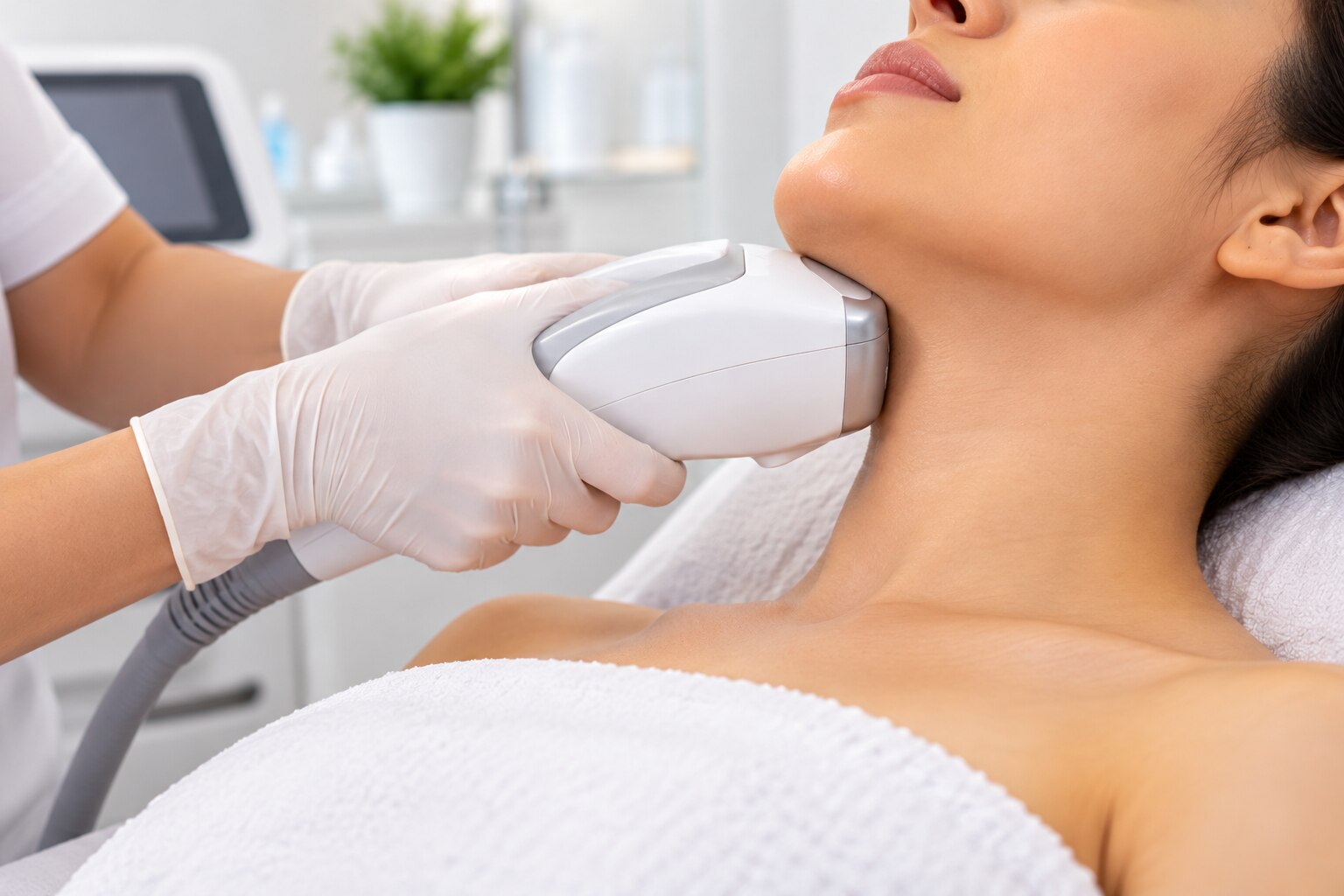
| Radiofrequency or focused ultrasound | No needle entry point | Controlled heat is delivered externally |
Injectable treatment therefore follows a different sequence from laser-fibre treatment. After external treatment, the skin is checked in the same way. The area is covered if needed and observed before discharge. Local anaesthetic reduces sharp pain, not pressure, pulling or heat.
If you are considering double chin treatment in Mumbai, confirm the instrument and access method before treatment begins.
How the area feels and what recovery requires
A cannula can create pressure, pulling or tenderness; energy delivery can feel warm or hot; injections can sting. Afterward, expect firmness, tightness, bruising, redness, swelling or temporary numbness. These sensations vary with the method and do not prove that treatment has worked.
Deoxycholic-acid swelling can be substantial and remain visible for days or weeks. That can affect work attendance even when you feel well, so confirm your expected return-to-work date before booking. Less downtime than surgery is one of the potential double chin reduction benefits, not a promise of an invisible recovery.
Energy-based procedures have technology-specific risks. Ask which device and settings are being used, because possible problems include:
- Burns or significant pain
- Temporary nerve symptoms or facial weakness
- Contour irregularity
- Paradoxical fat enlargement
Follow the written aftercare plan for sleeping position, exercise, shaving, skincare around entry points, sun protection and any compression or dressing. Do not rub, puncture or apply unapproved products to treated skin. These instructions are part of chin contouring without surgery, not optional extras.
Contact the clinic promptly for spreading redness, worsening pain or fever. Seek urgent help for marked facial weakness, difficulty swallowing or breathing. The practical recovery burden belongs in the comparison with liposuction or a neck lift: non-surgical treatment avoids an incision, but it can involve visible swelling, repeated visits and less predictable contour change.
When results appear and how to judge the decision
Final appearance is assessed only after swelling and firmness settle; judging the contour earlier can make a good result look disappointing or hide asymmetry.
| Option | Timing and review | What it can and cannot change |
|---|---|---|
| Deoxycholic acid | Up to six sessions, at least one month apart under the labelled regimen | Reduces a discrete fat pocket; does not tighten hanging skin or project a recessed chin |
| Laser-fibre or Endolaser | Duration, session count, interval and review date confirmed by the clinician | Targets fat and tissue response; the exact device and settings matter |
| Radiofrequency, focused ultrasound or cryolipolysis | Device-specific schedule and review | Uses controlled heat or cooling; results depend on indication, skin elasticity and fat distribution |
| Chin filler, liposuction or neck lift | Planned according to the structural problem | Filler adds projection, liposuction removes fat surgically, and a neck lift addresses excess skin |
The double chin reduction benefits are strongest when submental fat causes the fullness and your weight remains stable. Treatment will not create a sharper bony jawline, correct a low chin, remove hanging skin or prevent fullness returning after weight gain.
Before booking double chin treatment in Mumbai, ask for:
- The diagnosis and named product or device
- Expected downtime and the review date
- The operator’s plan for burns, nerve symptoms, asymmetry or contour irregularity
A search for non surgical for double chin reduction in Mumbai should lead to that comparison, not a label alone. Dr. Akshay Kishor can help compare those findings with filler, surgery or another non-surgical option when the cause of fullness is uncertain.
Related services
Cosmetology Non Surgical Double Chin Reduction Double Chin removal to regain your jawline. Non surgical laser fibre double chin fat melting. No surgery, No liposuction View service → |
Cosmetology Endolaser (Endolift) Treatment For Skin tightening, Face and Neck lift and fat melting View service → |
Frequently asked questions
What does the consultation for non-surgical double chin reduction include?
It reviews your medical history, allergies, medicines, previous cosmetic procedures and symptoms such as swallowing difficulty or unexplained neck swelling. The clinician also assesses whether submental fat is causing the fullness.
How does diagnosis determine the treatment?
The diagnosis distinguishes submental fat from other causes of fullness, such as loose skin or neck swelling. The findings determine whether non-surgical chin reduction is suitable and which treatment fits your anatomy.
What happens during the treatment appointment?
The clinician confirms the treatment plan, prepares the area and performs the selected non-surgical procedure. Ask what sensations, aftercare steps and follow-up schedule apply to your treatment.
How does the treated area feel afterward?
You should discuss expected tenderness, swelling and other sensations before treatment. Recovery requirements depend on the procedure, so follow the clinician’s instructions and report concerning symptoms.
When should you judge the results?
Results appear gradually rather than immediately. Assess the change after the advised review period and compare the improvement with your original goals, recovery time and available alternatives.
Keywords