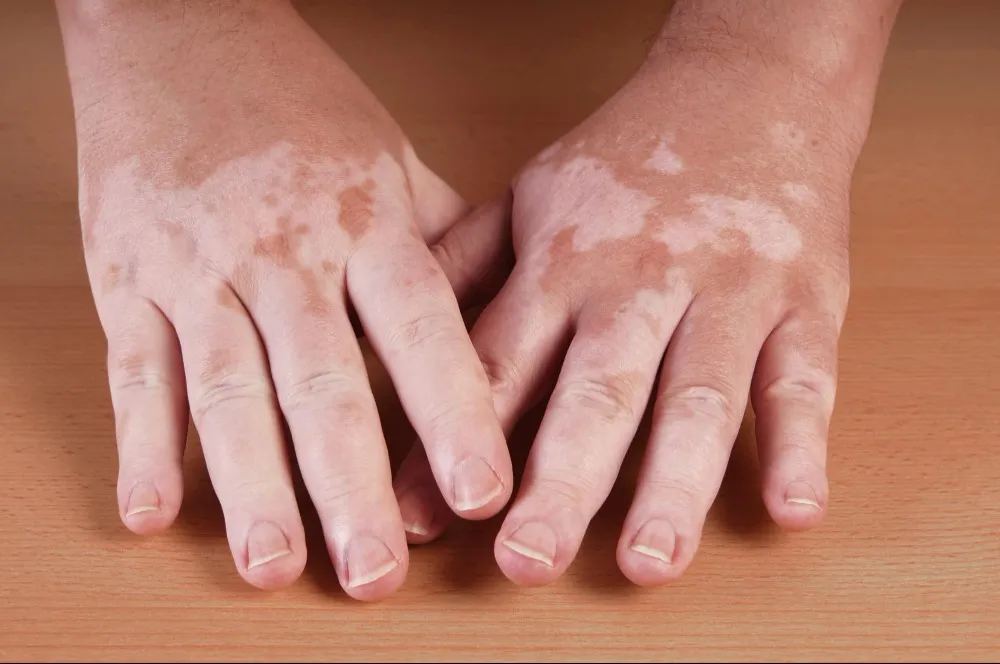
A new white patch can immediately raise concerns about vitiligo, but not every pale area of skin has the same cause. Fungal infections, post-inflammatory colour changes, certain birthmarks, and other dermatological conditions can sometimes produce lighter patches.
Vitiligo Treatment in Mumbai therefore begins with accurate diagnosis rather than simply trying to restore colour to any white spot.
What Is Vitiligo?
Vitiligo is a condition in which pigment-producing cells called melanocytes are lost or stop functioning in affected areas. This produces depigmented patches that can occur on different parts of the body.
The condition is considered to involve autoimmune mechanisms, although its behaviour varies considerably between individuals. Some people develop only a few stable patches, while others experience progression over time.
Vitiligo is not contagious. It cannot be passed from one person to another through touching, sharing food, or ordinary social contact.
That distinction is important because misconceptions surrounding visible pigment changes can create unnecessary social and emotional pressure.
How Can Vitiligo Begin?
The first noticeable change may be a small light or white patch. Commonly affected areas can include the face, hands, feet, elbows, knees, and areas around body openings. Hair within affected skin can occasionally lose pigment as well.
A dermatologist considers characteristics such as:
- Colour and borders of the patch
- Distribution across the body
- Whether patches are increasing
- Presence of similar areas elsewhere
- Family or personal medical history
- Previous inflammation or injury
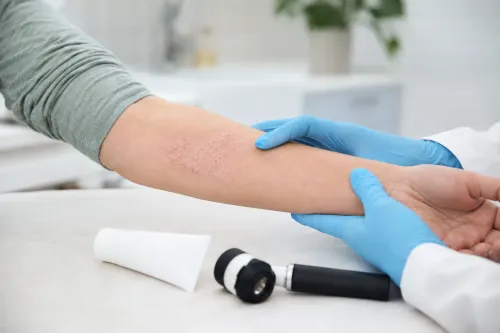
Special examination techniques may sometimes help distinguish vitiligo from other causes of reduced pigmentation.
Does Every Case Progress?
No. Vitiligo is unpredictable.
Some patches remain unchanged for extended periods, while other cases become active and develop new areas. Treatment decisions can therefore depend partly on whether the condition appears stable or progressive.
This is also why photographs and follow-up visits can be valuable. They help establish whether pigmentation is genuinely changing rather than relying solely on memory.
What Treatments May Be Considered?
Management is individualised according to the patient's age, location and extent of patches, disease activity, skin type, and previous treatment response.
Depending on these factors, dermatologists may consider topical medicines, light-based therapy, or other medical approaches. Certain stable cases may be evaluated for procedural options where appropriate.
Treatment generally requires patience because repigmentation develops gradually.
Areas such as the face may behave differently from the hands or feet, so response cannot be predicted solely from another patient's experience.
Sun Protection Has an Important Role
Depigmented skin contains less melanin and can be more vulnerable to sunlight. Appropriate sun protection can therefore be useful, particularly for exposed areas.
It may also reduce the contrast between normally pigmented and depigmented skin caused by tanning of surrounding areas.
In a bright coastal city such as Mumbai, Maharashtra, regular sun-protection habits can be especially relevant for exposed skin.
Be Careful With Unverified 'Permanent Cure' Claims
Vitiligo frequently attracts misleading advertisements promising rapid or guaranteed permanent restoration.
Treatment outcomes vary. A responsible approach explains what can reasonably be attempted, how long treatment may take, and why different body areas may respond differently.
At the Mumbai dermatology practice of Dr. Akshay Kishor, evaluation of suspected vitiligo can help distinguish it from other pigmentary conditions and guide treatment according to its distribution and activity.
When Is an Assessment Worthwhile?
Consider dermatological evaluation when a white patch is new, enlarging, appearing in multiple places, or associated with loss of colour in nearby hair. Children and adults can both develop vitiligo, so age alone should not be used to rule it out.
Early assessment also gives patients the opportunity to understand the condition before experimenting with multiple creams or home remedies.
White patches deserve a diagnosis, not assumptions. Once the cause is established, patients can make informed decisions about treatment, realistic expectations, skin protection, and follow-up.
Keywords