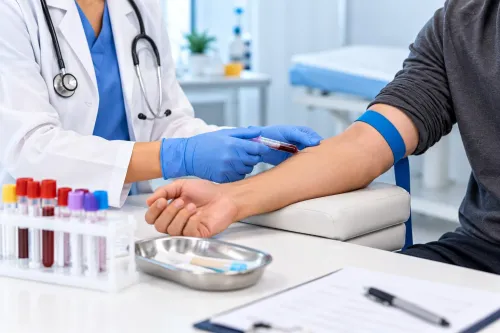

A first HIV appointment involves more than giving a blood sample: the clinician works from your exposure date, health history, medicines, and immediate prevention needs. By the end, you should know what to bring, which test timing makes sense, how privacy and consent work, and what happens after a reactive or confirmed result.
Key takeaways
- Choose testing, consultation, screening, or treatment review based on your reason for care.
- Record the exposure date, symptoms, prior tests, medicines, and questions before your appointment.
- Ask which test suits the time since exposure and how results will be communicated.
- A reactive screening result requires confirmatory testing and follow-up medical guidance.
What happens during an HIV consultation from booking to examination?
Choose an appointment that matches your need and record the reason for care, such as recent exposure, symptoms, routine testing, or review of a previous result.
The HIV consultation process in Mumbai begins with a private conversation about the date and type of exposure, condom use, sexual partners, injecting-drug exposure, earlier HIV tests, symptoms, pregnancy possibility, and current medicines.
The clinician may ask:
- When the possible exposure occurred and whether it involved vaginal, anal, or oral contact
- Whether you used PEP or PrEP, and the doses taken
- Any fever, rash, sore throat, swollen glands, weight loss, or other symptoms
- Tuberculosis, hepatitis B or C, other STI risks, allergies, and vaccination history
Symptoms alone cannot diagnose HIV. You can attend alone, bring a partner, or ask whether a support person may join; your history and consent should be taken privately. A partner’s testing and treatment decisions remain separate, even when you attend together.
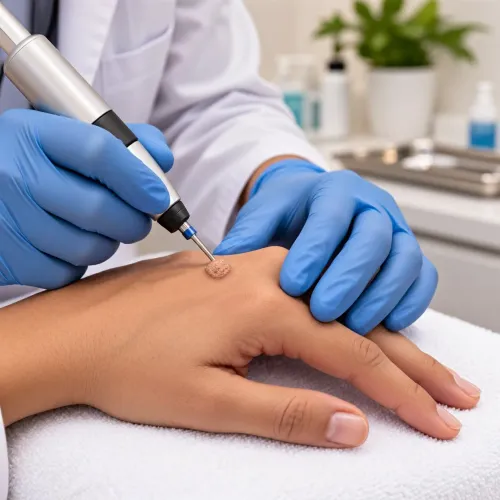
The clinician examines you for relevant infections and decides whether urgent PEP assessment is needed. The plan may include HIV testing, STI specimens, hepatitis and tuberculosis evaluation, vaccination review, pregnancy or reproductive planning, and medicine checks. A reactive screening result requires confirmation before diagnosis, followed by clear instructions for results and follow-up.
| Option | What happens | Best when |
|---|---|---|
| HIV test appointment | Specimen collection and result reporting | You already know the test and timing |
| HIV consultation | Risk assessment, examination, test selection, and PEP advice | You need clinical guidance |
| Full STI screening | Separate blood, urine, throat, vaginal, cervical, or rectal tests | You need broader infection testing |
What should you prepare, and how are consent and privacy handled?
Before booking HIV testing in Mumbai, prepare the facts that determine test timing and follow-up. Carry these items if available:
1. A government identity document, if the facility requests identity verification; previous HIV and STI reports; photographs or a list of current medicines; allergy details; and records of recent vaccinations or pregnancy-related care.
2. A written exposure record: the last possible exposure date, type of contact, condom use, any PEP or PrEP doses, and the date of every earlier HIV test. Accurate dates help the clinician interpret a negative result.
3. A note about who you want involved. You can attend alone, attend with a partner, or ask whether a support person may join. Each person gives consent separately, and one partner’s result is not automatically disclosed to the other.
Fasting is not required for a standard HIV blood test. Ask beforehand if the clinician orders additional tests with separate preparation instructions.
Before giving a sample, ask:
- Who will receive the result?
- How will the report be stored?
- Will results be sent by SMS, email, WhatsApp, or another electronic channel?
- How are referrals and partner notification handled?
- What is the process for minors or for avoiding disclosure to relatives and employers?
The HIV and AIDS (Prevention and Control) Act, 2017 protects informed consent and confidentiality in India. An identity check supports accurate reporting; it does not authorise routine sharing with employers, relatives, or unrelated staff.
Which HIV test and timing are appropriate after a possible exposure?
A laboratory fourth-generation antigen/antibody blood test detects p24 antigen as well as HIV antibodies, so it can identify infection earlier than an antibody-only test. The CDC describes a usual detection window of about 18–45 days after exposure for this laboratory test; antibody-only tests can take longer.
| Test or action | What it detects or does | When it applies |
|---|---|---|
| Fourth-generation laboratory blood test | p24 antigen and HIV antibodies | Common early laboratory test; interpret against the last possible exposure |
| Antibody-only HIV test | HIV antibodies | Useful testing option, but the detection window can be longer |
| HIV-1/HIV-2 differentiation assay | Helps distinguish HIV-1 from HIV-2 after a reactive screen | Follow-up when the initial result needs clarification |
| PEP | A 28-day course of antiretroviral medicines | Start urgently after exposure within 72 hours; do not wait for routine testing |
A non-reactive result can be too early if testing occurred during the window period, so the HIV consultation process in Mumbai uses the last possible exposure date, not only your appointment date, to decide whether repeat testing is needed.
Tell the clinician about PEP, PrEP, or antiretroviral treatment because these medicines can affect detectability and interpretation.
HIV testing in Mumbai follows a staged algorithm. One reactive screening result is not a confirmed diagnosis; sequential follow-up tests are required. PrEP is planned prevention for ongoing risk, not emergency treatment after one event.
Which appointment do you need: HIV test, consultation, STD screening, or treatment review?
Choose based on what you need today: an isolated result, risk assessment, broader infection testing, or treatment planning.
| Appointment | What it covers | Choose it when |
|---|---|---|
| HIV test | Specimen collection and result reporting | You know the exposure timing and the required test |
| HIV consultation | Exposure-risk assessment, window-period advice, examination, and PEP or PrEP decisions | You need help choosing a test or interpreting a previous result |
| Full STD screening | Examination plus separate specimens for HIV and other infections | You want broader testing beyond HIV |
| Treatment review | Explanation of a reactive screening result, confirmation steps, or care after diagnosis | You need results interpreted and a management plan |
A full STD screening may use blood, urine, throat, vaginal, cervical, or rectal specimens. It can assess syphilis, gonorrhoea, chlamydia, hepatitis B, hepatitis C, and herpes, depending on your exposure and symptoms. A negative HIV result does not rule out these infections.
A reactive HIV screening result is not a confirmed diagnosis. Choose a treatment review if you need sequential confirmatory testing, baseline investigations, infectious-disease care, or referrals. When choosing an HIV doctor in Mumbai, ask whether the clinician arranges these steps rather than giving a definitive answer from one reactive result.
An HIV treatment consultation in Mumbai suits someone who needs ongoing care after confirmation. Dr. Akshay Kishor may suit patients who want one confidential clinical setting to assess sexual-health, dermatological, and HIV-related concerns without treating a skin or hair finding as proof of HIV.
Related service
SEXUAL HEALTH HIV • HIV Care & Management – Dr. Akshay Kishor: Confidential counselling, testing guidance, and comprehensive management for individuals affected by... |
What happens after a reactive or confirmed result?
A reactive screening result is not a diagnosis. Testing proceeds through sequential confirmatory tests using different assay principles or antigens; until that algorithm is complete, the clinician should explain the result, protect confidentiality, arrange the next test, and address urgent medical needs.
A confirmed result starts ongoing care, not a wait for symptoms or a low CD4 count. During an HIV treatment consultation in Mumbai, antiretroviral therapy is recommended for essentially everyone diagnosed with HIV.
| Result | What happens | Your next step |
|---|---|---|
| Reactive screening test | Confirmation is still pending | Complete the scheduled confirmatory testing |
| Confirmed HIV infection | HIV care and antiretroviral treatment are recommended | Begin treatment planning and baseline assessment |
| Durably undetectable viral load | Sexual transmission is prevented while suppression is maintained | Continue treatment and monitoring |
An HIV doctor in Mumbai commonly arranges:
- CD4 count, viral load, kidney function, liver function, and drug-interaction checks.
- Tuberculosis evaluation, hepatitis B and C testing, syphilis and other STI tests.
- Vaccination review, pregnancy or reproductive planning, contraception, and mental-health support.
Follow-up checks adherence, side effects, stigma, transmission prevention, and repeat viral-load results. Consistent treatment can produce a durably undetectable viral load, which prevents sexual transmission, but it does not remove the need to test and treat other STIs. Do not stop medicines without medical advice: missed or interrupted treatment can cause viral rebound and resistance.
Frequently asked questions
What happens during an HIV consultation from booking to examination?
You select an appointment based on your concern, discuss exposure or symptoms with the doctor, review your history, and receive advice on testing or further care.
What should you prepare for an HIV consultation?
Record the date and type of possible exposure, symptoms, previous HIV tests, medicines, and questions. Bring earlier reports if you have them.
How is privacy handled during HIV testing and consultation?
Discuss consent, who can access your information, how results will be delivered, and which details must be recorded before testing.
Which HIV test is appropriate after a possible exposure?
The suitable test depends on the time since exposure and your clinical situation. Ask the doctor about the test window period and whether repeat testing is needed.
What happens after a reactive HIV test result?
A reactive screening result is not the same as a confirmed diagnosis. Arrange confirmatory testing and follow the doctor’s instructions for medical review and treatment planning.
Keywords