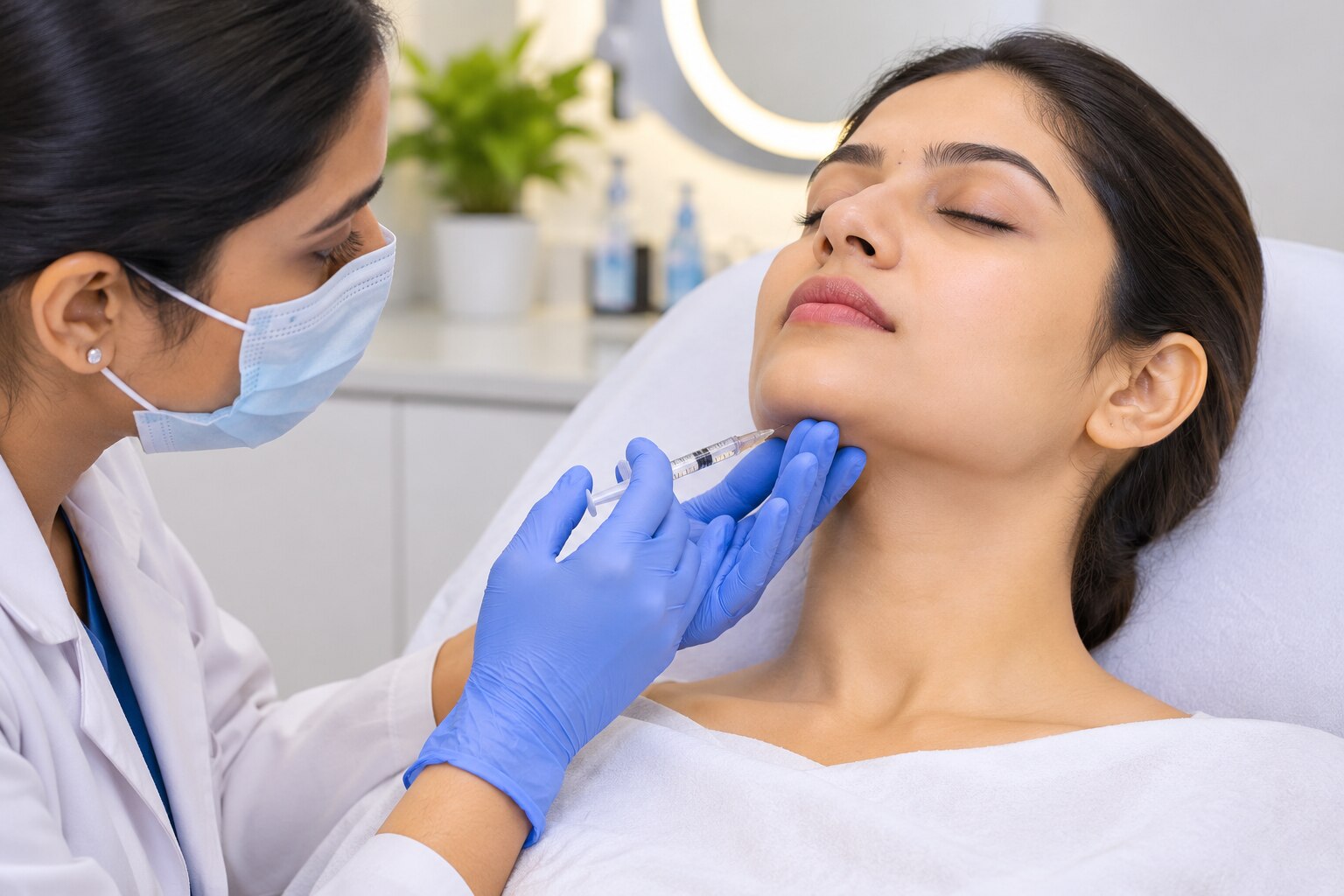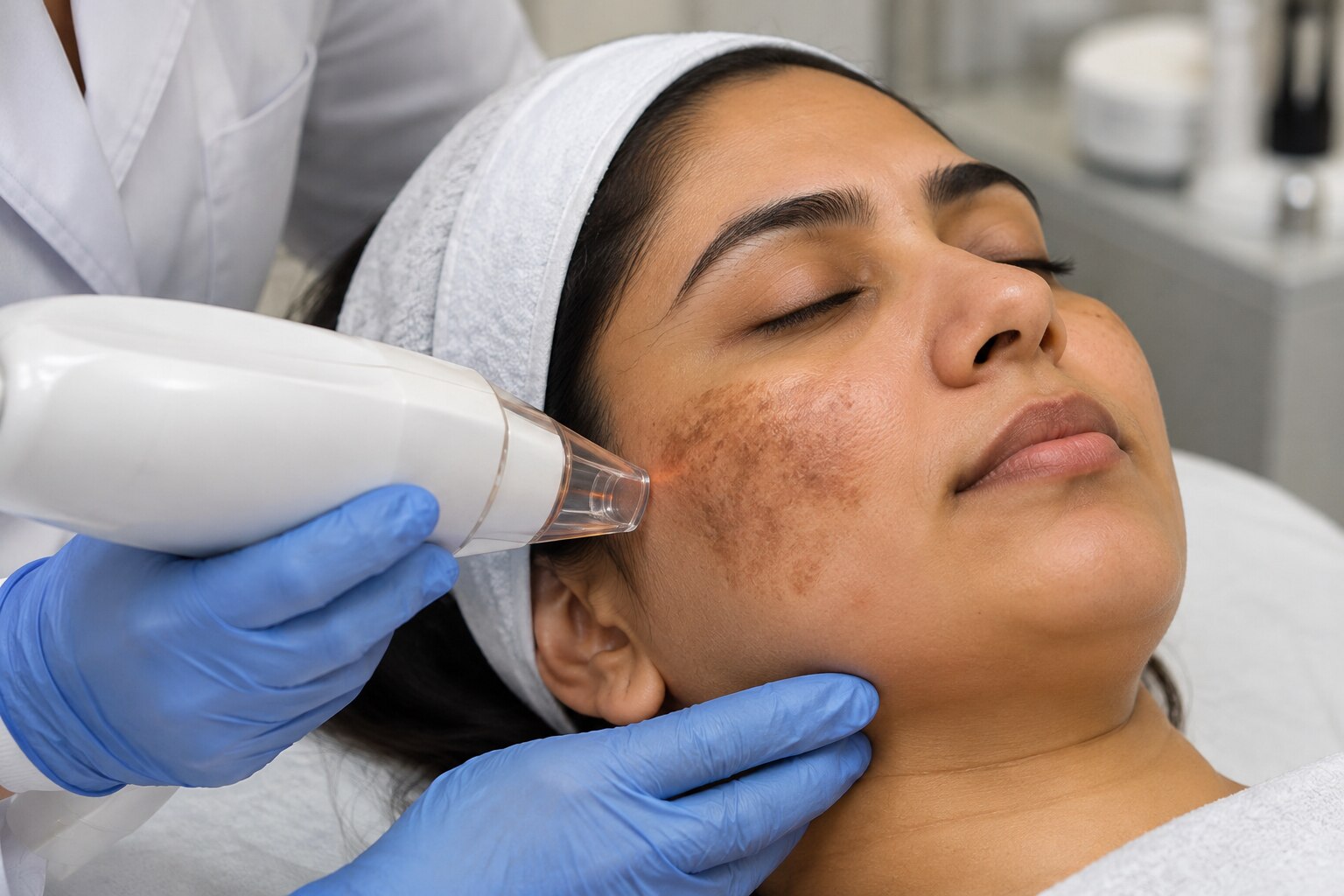
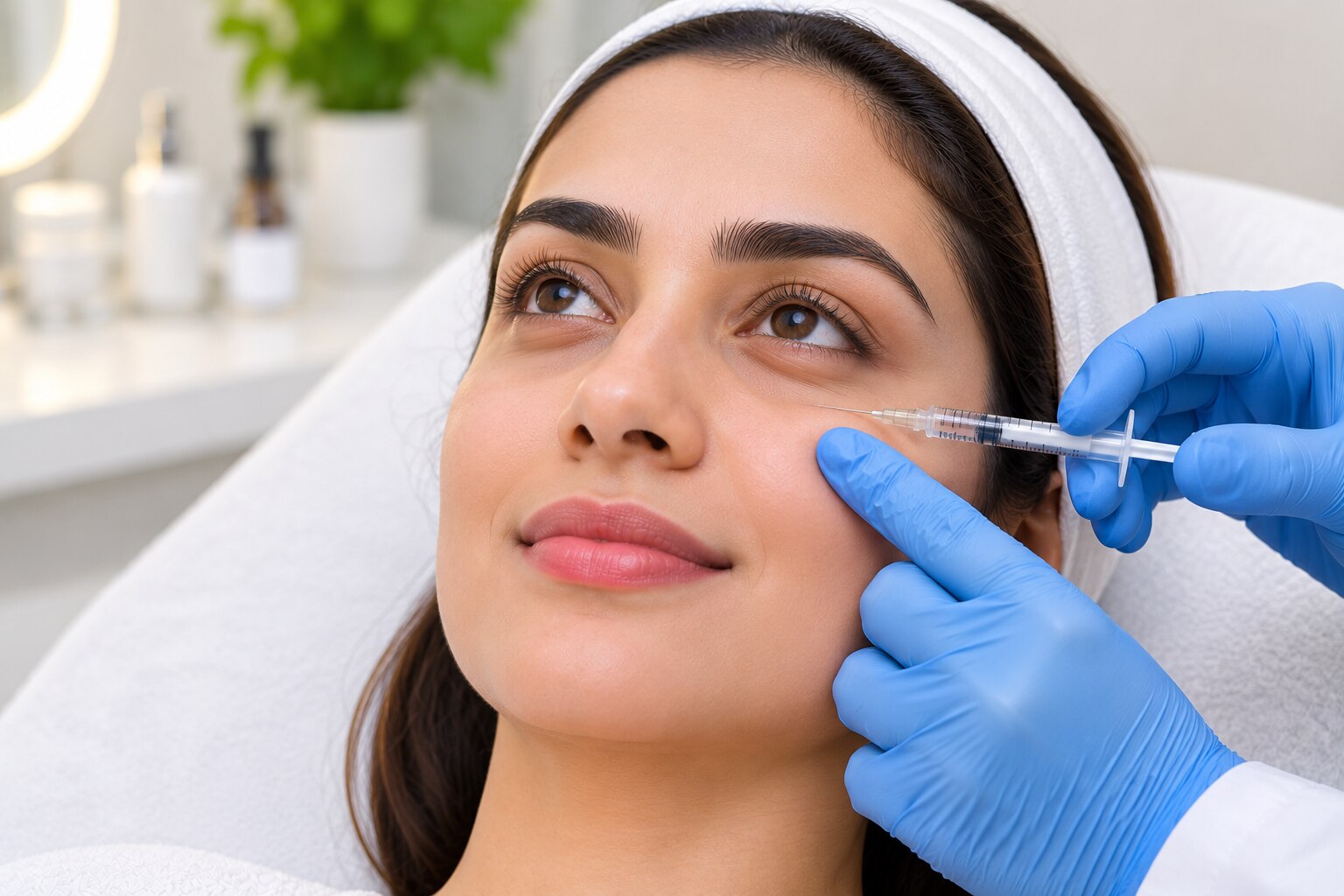
A dark under-eye area can come from a tear-trough hollow, melanin, visible vessels, thin skin, puffiness, eczema, allergy-related rubbing, or several causes at once. By the end, you will know how to identify the dominant cause, compare filler with non-filler care, and prepare for a safer consultation in Mumbai.
Key takeaways
- A fixed tear-trough hollow creates a shadow that stretches cannot remove.
- Choose filler for structural hollows, not pigmentation, visible veins, or eye bags.
- Compare PRP, PRF, PDRN, peels, and fat transfer by cause and downtime.
- Seek urgent help for sudden swelling, pain, vision changes, or skin colour change.
First identify what is making the under-eye look dark
A true tear-trough hollow creates a stable depression from the inner lower eyelid towards the cheek, producing a shadow that changes with overhead light. Gently stretching the skin will not remove the contour gap. Filler can reduce that shadow, but it cannot treat every cause of a dark-looking under-eye.
| Cause | Clues you can check | Why filler may miss it |
|---|---|---|
| Brown pigmentation | Brown colour remains visible in bright, even light and stays when the skin is gently stretched | Added volume does not remove melanin |
| Vessels or thin skin | Blue, purple, or red tone; fine veins may be visible; the skin looks translucent | Filler does not hide prominent vessels reliably |
| Puffiness, bags, or festoons | Swelling is strongest after waking, with allergies, or after salty food; a bulge remains despite a hollow beside it | Added volume can make the lower eyelid heavier |
| Irritation or allergy | Itching, scaling, redness, watering, or rubbing; colour followed eczema or dermatitis | Injection should wait until inflammation is controlled |
| Tear-trough hollow | A distinct depression casts a shadow without redness, scale, or fluid swelling | This is the problem filler is designed to camouflage |
Mixed causes are common. Take a photograph in daylight, look straight ahead and slightly upward, and compare both sides; then ask for an examination of eyelid skin, bags, laxity, and prior swelling before choosing undereye filler or dark circle treatment in Mumbai.
Darkening after rubbing points towards inflammation or post-inflammatory pigmentation, not a simple volume deficit.
When does filler suit the problem, and when does dark-circle care fit better?
Filler suits a true tear-trough volume deficit when the lower eyelid is relatively smooth and can tolerate added volume; it softens a contour shadow, not the underlying skin colour.
Dark-circle care fits better when brown pigment, blue-purple vascular show-through, visible veins, thin translucent skin, eczema, allergy-related rubbing, puffiness, festoons, lower-eyelid fat, or laxity drives the appearance. Adding filler over bags or oedema can make the area heavier and more swollen.
Choose the plan around the dominant finding:
- Pigment: use daily broad-spectrum sunscreen, stop rubbing, treat dermatitis, and consider carefully selected topical, peel, or laser treatment. Irritation can cause post-inflammatory hyperpigmentation, especially in darker skin.
- Vascular colour or thin skin: allergy control and selected resurfacing or regenerative treatments may help, but they do not replace lost volume.
- Puffiness, festoons, protruding fat, or loose skin: assess medical or surgical options; filler is usually the wrong tool.
In Mumbai, dark circle treatment options include diagnosis-led care rather than a standard injection. Discuss vascular occlusion, skin necrosis, stroke, and visual loss before any needle enters this high-consequence area.
| Option | Best match | Main limitation |
|---|---|---|
| Hyaluronic-acid filler | True hollow and volume shadow | Can worsen swelling; temporary and adjustable, but not risk-free |
| Topical, peel, or laser care | Selected pigment or surface change | Can irritate eyelid skin and cannot correct a deep hollow |
| PRP, PRF, or PDRN | Selected thin-skin or texture concerns | Not structural replacements; results vary and require sessions |
| Fat transfer | Larger, persistent volume deficit | More invasive and less readily adjustable |
How do filler, PRP, PRF, PDRN, peels, and fat transfer compare?
A true tear-trough hollow needs added volume; malar bags, festoons, lower-eyelid fat bulges, edema, and loose skin do not. Filler placed over puffiness can make the lower eyelid heavier. This is the central issue in an undereye hollow treatment comparison in Mumbai, not simply a choice between branded procedures.
| Option | Best target | Practical differences |
|---|---|---|
| Hyaluronic-acid filler | Structural hollow and shadow | Minimally invasive; little downtime; reversible with hyaluronidase, though correction is not risk-free; often one staged session; roughly six months or longer, depending on product and patient; predictable when the anatomy suits it. |
| PRP | Thin skin and mild texture change | Needle-based blood-derived treatment; bruising is possible; not a structural replacement for a deep hollow; usually a series; effects develop gradually and vary. |
| PRF | Thin skin and early volume or texture concerns | Similar blood draw and injections, with no reliable instant contour correction; several sessions are common; gradual, variable results and limited reversibility. |
| PDRN | Skin quality and fine texture | Injectable, with short-lived swelling or bruising; does not remove a hollow; usually multiple sessions; duration and predictability remain variable. |
| Peels | Selected surface pigmentation | Least invasive, but peeling and irritation can occur; several sessions may be needed; results depend on pigment type and aftercare; irritation can worsen post-inflammatory pigmentation. |
| Fat transfer | Larger volume deficit | Surgical and less adjustable; swelling and bruising last longer; usually one procedure, sometimes revision; can last for years, but fat survival and symmetry are less predictable. |
For hollow under eyes treatment in Mumbai, ask whether the proposed plan addresses volume, pigment, vessels, or skin quality. Fat transfer is not a simple alternative to filler, and excess skin or protruding fat may point toward lower blepharoplasty instead.
What should happen during an undereye consultation in Mumbai?
An undereye filler consultation in Mumbai should end with a diagnosis before it ends with a syringe. The clinician should examine you sitting upright, at rest and smiling, under consistent lighting, then assess the tear trough, lower-eyelid skin, visible vessels, pigmentation, fat bulges, malar bags, festoons, puffiness, laxity and eczema.
Ask these questions before agreeing to treatment:
- Is the main problem a true volume-related shadow, or is filler being asked to treat pigment, vessels, thin skin or puffiness?
- Do I have lower-eyelid laxity, protruding fat, festoons or edema that added volume could worsen?
- Have you checked for active infection, eyelid inflammation or irritation?
- What happens if I have swelling, a lump, asymmetry or a bluish Tyndall effect?
- What is the emergency plan for increasing pain, blanching, dusky skin or any visual change?
The medical history should cover previous filler or eyelid surgery, allergies, eczema and eye rubbing, bleeding disorders, blood thinners or other medicines that increase bruising, and past visual symptoms. Postpone injection during an active infection or untreated inflammatory eyelid disease.
| Finding | More suitable direction | Why |
|---|---|---|
| True tear-trough hollow with firm skin | Filler discussion | Adds volume to a structural shadow |
| Brown pigment or post-inflammatory marks | Pigment-focused care | Filler does not remove melanin |
| Puffiness, fat bulge or festoon | Non-filler or surgical assessment | Added volume can make heaviness worse |
Ask Dr. Akshay Kishor to record baseline photographs and explain vascular-occlusion and vision-loss risk, not only bruising and swelling.
Related service
Cosmetology Undereye Hollow And Dark Circles Treatment All types of Undereye Hollow And Dark Circles Treatment PRP PRF Biofiller Filler PDRN Peel Fat transfer View service → |
When is filler a poor choice, and which symptoms need urgent help?
Added volume is a poor choice when the main issue is puffiness, malar bags, festoons, protruding lower-eyelid fat, loose skin, pigment, visible vessels, or thin translucent skin. Filler can make an already swollen lower lid look heavier, and it will not remove brown colour or blue-purple show-through.
Postpone injection for active skin or eye infection, eczema, untreated eyelid inflammation, or uncontrolled allergy-related rubbing.
| Situation | Why filler is a poor choice | More suitable response |
|---|---|---|
| Puffiness, festoons, or fat bulges | Added volume can increase heaviness and swelling | Assess medical or surgical options, including lower blepharoplasty |
| Pigmentation or visible vessels | Filler does not change melanin or vascular colour | Treat the cause with pigment care, allergy control, or selected procedures |
| Active infection or eyelid inflammation | Injection can worsen inflammation or spread infection | Treat the condition first and reschedule |
Swelling, bruising, tenderness, mild redness, or small lumps can occur after treatment. Contact the injector promptly if swelling keeps increasing, a lump becomes painful, or delayed redness develops.
Treat these as emergencies:
- Increasing or severe pain with pale, white, dusky, or mottled skin
- Any new blurred vision, double vision, loss of vision, or unusual eye pain
- Rapid swelling with breathing difficulty, facial swelling, or widespread hives
Do not massage the area or wait for symptoms to settle. Contact the injector immediately and go to an emergency department for visual symptoms or rapidly worsening skin changes. Hyaluronidase can dissolve hyaluronic-acid filler, but it does not reverse every filler type.
Frequently asked questions
How can you tell whether a dark under-eye is a hollow or pigmentation?
A stable depression from the inner lower eyelid to the cheek creates a shadow that changes with overhead light. Stretching the skin will not remove a true contour gap. Brown or grey colour, visible vessels, thin skin, rubbing, eczema, and eye bags point to other causes.
When does undereye filler suit the problem?
Filler suits a genuine tear-trough hollow when the main problem is lost support and shadow from the contour. It does not treat pigmentation, visible veins, thin skin, allergies, or prominent fat pads.
How do PRP, PRF, PDRN, peels, and fat transfer compare with filler?
Filler adds volume directly to a hollow. PRP and PRF use platelet products for skin-quality goals, PDRN is used in regenerative skin protocols, and peels target selected surface pigmentation. Fat transfer uses your own fat for longer-lasting volume but involves a surgical procedure. Your diagnosis determines which option fits.
What should happen during an undereye filler consultation in Mumbai?
The clinician should examine your lower-eyelid contour, pigmentation, skin thickness, vessels, eye bags, allergies, medicines, previous procedures, and photographs in different lighting. Ask which finding is being treated, which alternatives fit, what risks apply, and what follow-up is planned.
When is undereye filler a poor choice, and which symptoms need urgent help?
Filler is a poor choice when pigmentation, visible vessels, thin skin, fluid retention, or prominent eye bags cause the appearance. Seek urgent medical help for sudden swelling, severe pain, vision changes, double vision, or grey, white, or dusky skin after an injection.
Keywords