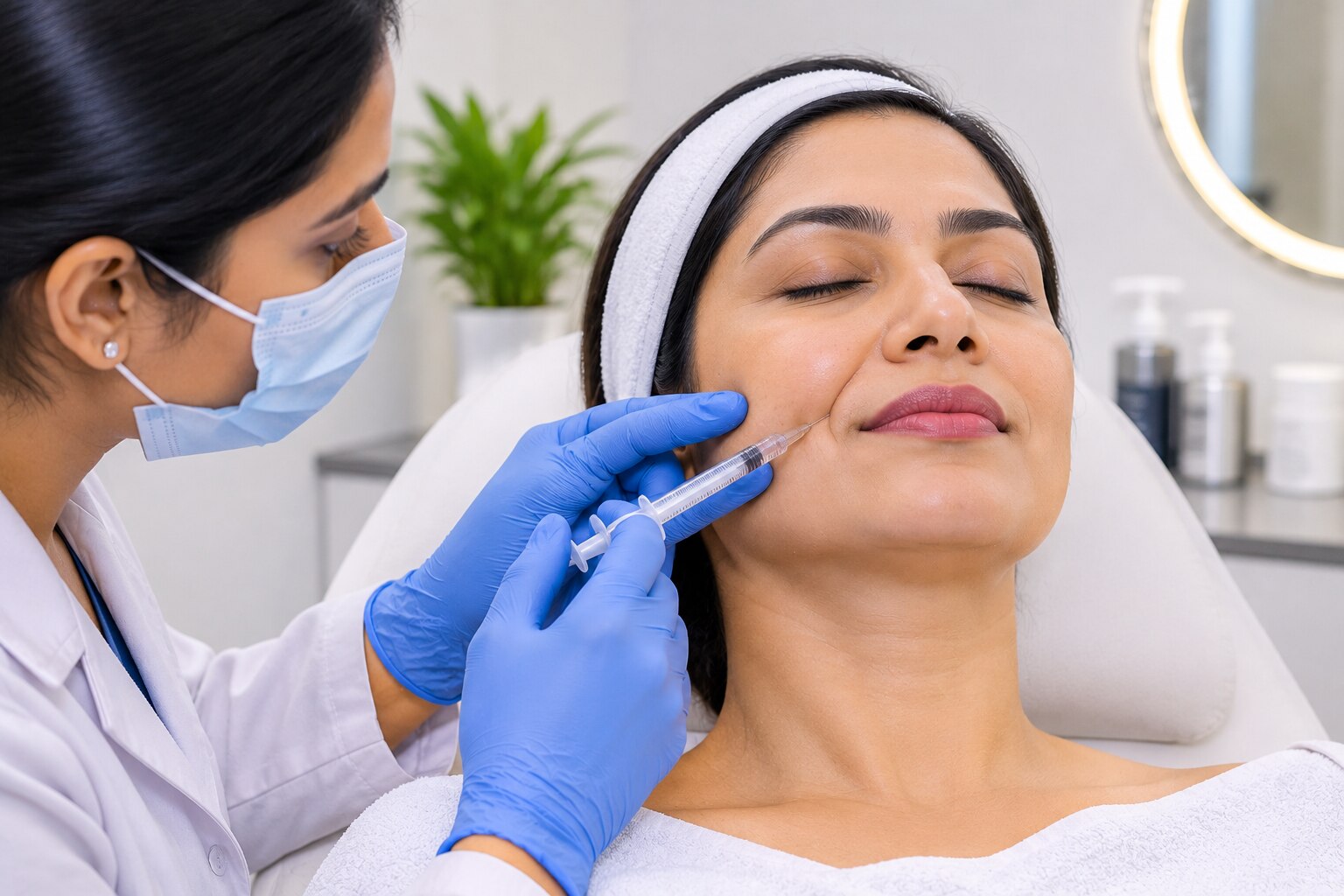
Nasolabial folds can reflect more than a deep crease beside the nose: cheek descent, midface volume change, skin laxity, facial movement, and asymmetry all affect their appearance. You will learn how to identify the real cause, compare treatment choices, check a clinic’s safety standards, and recognise when filler needs urgent medical attention.
Key takeaways
- Distinguish nasolabial folds from marionette lines, cheek hollowing and tear troughs.
- Ask who will inject, which product will be used, and how complications are handled.
- Postpone treatment during active skin infection, pregnancy or uncontrolled medical conditions.
- Seek urgent help for severe pain, pale or dusky skin, or vision changes after injection.
What Nasolabial Folds Are—and What Is Actually Causing Them
Nasolabial folds are the grooves that run from each side of the nose toward the corners of the mouth. They differ from marionette lines, which descend from the mouth corners toward the chin. Cheek hollowing is loss of fullness higher on the face; tear troughs lie beneath the eyes.
Ordinary smile creases appear mainly during expression and soften at rest.
A fixed fold can reflect midface fat descent or atrophy, reduced cheek support, skin laxity, ligament changes, or the person’s facial anatomy. Assessment should include both sides for asymmetry, the piriform aperture beside the nose, the upper lip, cheek volume, skin quality, and whether movement or resting structure dominates.
The deepest visible groove is not automatically the correct injection target.
| Finding | What it suggests | Why it changes treatment |
|---|---|---|
| Nasolabial fold | Nose-to-mouth groove | Direct or indirect support may be considered |
| Marionette line | Mouth corner-to-chin crease | It is a different anatomical problem |
| Cheek hollowing | Midface volume loss | Cheek support may matter more than the fold |
| Tear trough | Under-eye depression | Nasolabial filler is not the treatment area |
| Dynamic smile crease | Line mainly during movement | Filling it heavily can restrict natural expression |
Automatically placing filler beside the nose can create heaviness when cheek descent or laxity is the main cause. A search for facial line correction south in mumbai may describe filler, toxin, resurfacing, devices, or surgery; the diagnosis should determine the treatment, not the search phrase.
How Nasolabial Filler Is Planned, Injected, and Reversed
The deepest part of the fold is not always the first injection site. If cheek descent or midface volume loss drives the shadow, restoring support higher in the cheek can soften the fold without adding heaviness beside the nose.
An injector may choose direct fold treatment when the groove remains fixed after the cheek is supported. A staged plan combines midface and fold correction when both structural support and a residual crease need attention; reassessment after swelling settles helps avoid a large first treatment.
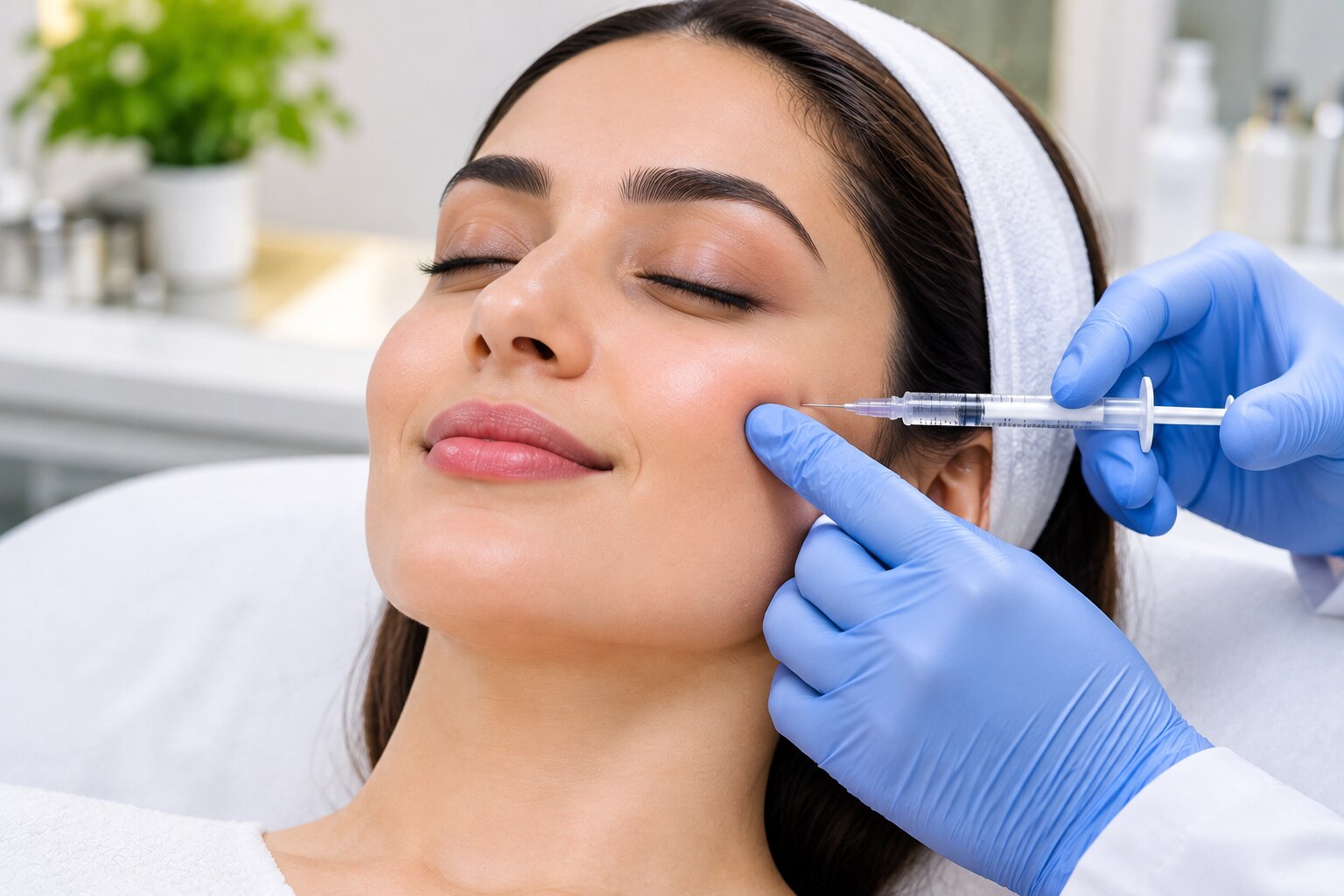
Hyaluronic-acid (HA) filler is commonly used because it provides temporary volume and can be reduced with hyaluronidase. The injector may place it in a deep supraperiosteal or subcutaneous plane, depending on anatomy and the treatment goal. A needle offers precise placement; a cannula may cover a broader area, but neither removes vascular risk.
Anatomy, plane, pressure, volume, and location still matter.
Product selection changes the result:
- A firmer, cohesive HA gives stronger support and usually holds shape longer, but can look or feel heavy if overused.
- A softer, more flexible HA follows facial movement better, but may provide less lift and require earlier maintenance.
- Higher water attraction can increase swelling, while conservative volume helps preserve smiling and natural expression.
Needle trauma, bruising, and swelling can make the immediate result look overfilled. Judge the settled outcome after the early inflammatory period. Hyaluronidase can reduce HA, not erase every trace instantly; residual product, inflammation, fibrosis, or uneven correction can remain. A nasolabial fold filler clinic south in mumbai should explain this staged process clearly.
Which Treatment Fits the Problem: Filler, Threads, Devices, or Surgery?
Direct hyaluronic-acid filler suits a fold that remains visible at rest; cheek or midface filler suits descent or hollowing that deepens the fold. Neither is automatically correct: adding volume beside the nose can create heaviness when laxity is the main problem.
| Option | Addresses | Cannot correct; downtime and reversibility |
|---|---|---|
| Direct nasolabial filler | Localised structural groove | Does not lift broad cheek descent; swelling or bruising for several days; HA can be reduced with hyaluronidase, but not always instantly or completely |
| Cheek or midface filler | Lost cheek support and descent | Does not erase a fixed skin crease; swelling and bruising are common; HA is partly reversible |
| Threads | Mild laxity and limited lifting | Do not replace volume or improve texture; soreness and swelling for days; removal is difficult |
| Botulinum toxin | Selected muscle activity and movement lines | Does not restore volume; incorrect mouth placement can impair smiling, speech, or oral competence; usually little downtime; effects wear off |
| Sculptra | Gradual collagen stimulation and diffuse volume loss | Not a precise instant fold correction; swelling or nodules can occur; not readily reversible; staged sessions are typical |
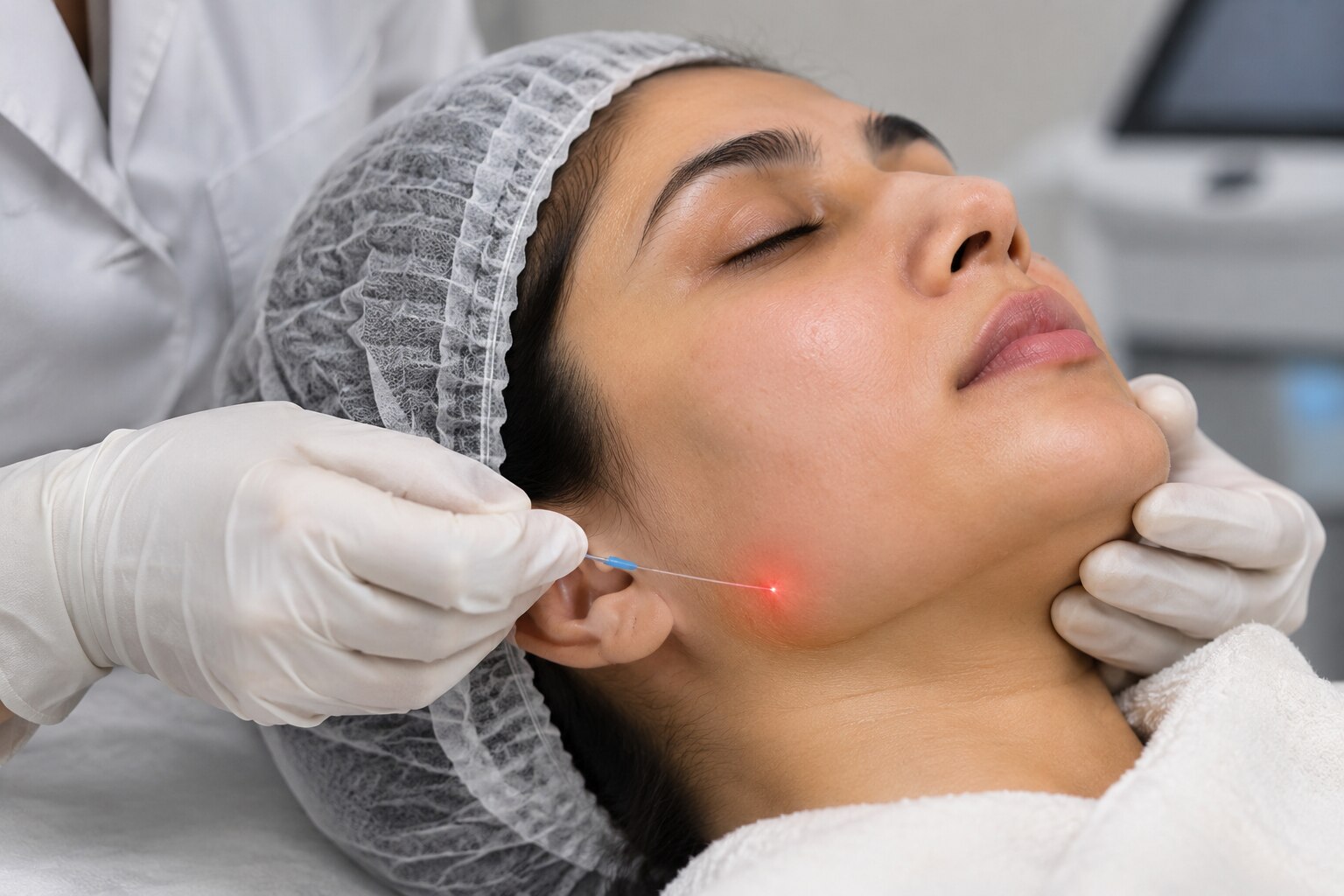
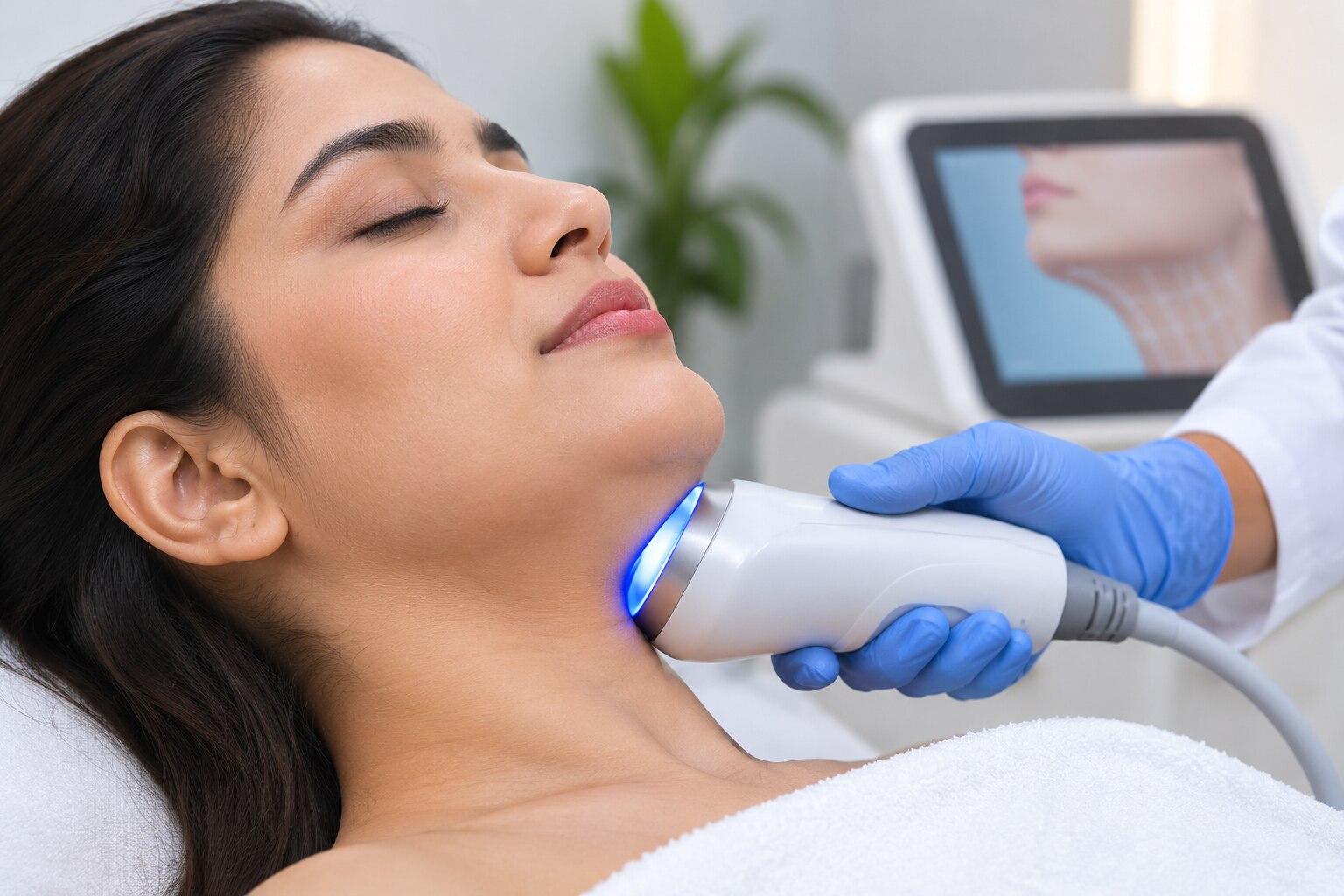
| Endolift or HIFU | Mild laxity or tissue tightening | Neither fills a hollow or reliably removes a deep fold; brief swelling or tenderness; results develop gradually and are not readily reversible |
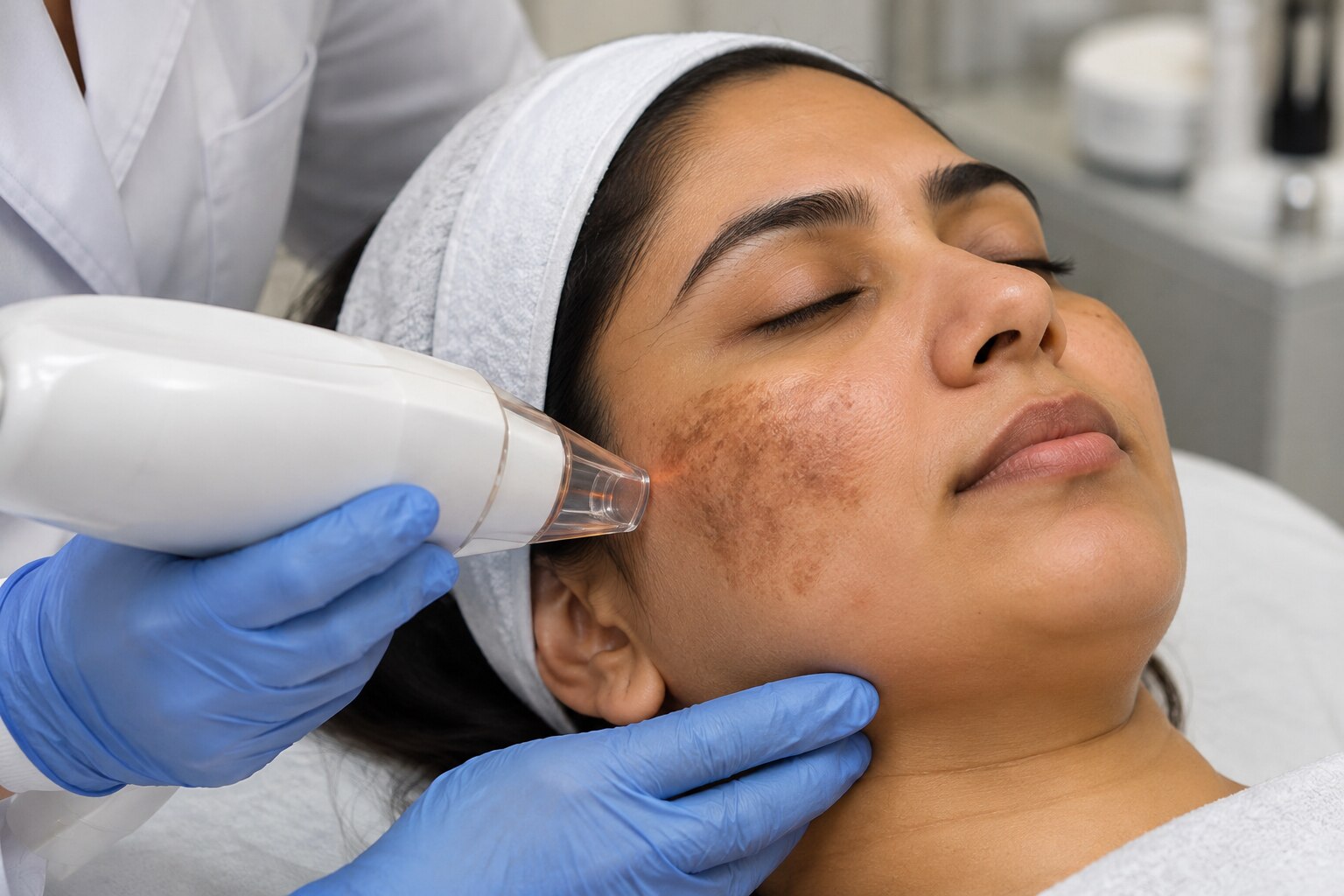
| Resurfacing | Texture, fine lines, or pigmentation | Does not lift tissue or replace volume; redness and peeling depend on depth; effects are not instantly reversible |
| Surgery | Significant laxity, descent, or excess skin | Not a treatment for pigmentation alone; longer recovery, scars, and operative risk; irreversible |
Some treatments require staging because swelling obscures the settled result, collagen develops slowly, or support must be restored before the fold is refined. Facial line correction south in mumbai may mean texture, pigmentation, movement, laxity, or volume; choose after diagnosis, not the search term.
Who Should Postpone Treatment and What Complications Require Action?
Postpone or reassess filler if anything near the injection site could increase infection, inflammation, bleeding, or poor healing. The clinician also needs your medical history before deciding that treatment is appropriate.
- Active skin infection, sores, cold sores, or significant inflammation near the nose or mouth
- An untreated dental infection or recent dental procedure requiring review
- Uncontrolled inflammatory or immune-mediated disease
- Pregnancy or breastfeeding when the clinician advises deferral
- A relevant immune disorder, bleeding disorder, or clotting problem
- A previous filler reaction, persistent nodule, or severe allergy
- Expectations that filler cannot realistically meet, such as permanent removal of every crease
Do not stop aspirin, anticoagulants, or other medicines that increase bleeding without instructions from the prescribing doctor. Report supplements and medicines during consultation; changing them independently can create a greater medical risk than bruising.
Tenderness, redness, itching, swelling, bruising, and small temporary lumps are common early effects. Infection, persistent nodules, asymmetry, delayed inflammatory swelling, and a blue-grey tint from superficially placed hyaluronic acid (the Tyndall effect) require clinical review.
Seek immediate assessment for severe or escalating pain, blanching, mottled or cool skin, or delayed capillary refill. Any visual symptom is an emergency because vascular occlusion can cause skin necrosis, eye injury, visual loss, or stroke; do not wait for routine follow-up.
Delayed swelling weeks or months later also needs review, especially after illness, dental work, or vaccination.
How to Check a South Mumbai Filler Clinic Before You Book
A Charni Road address identifies location, not medical quality. Search phrases such as nasolabial lines doctor in mumbai, smile line treatment charni road, or facial line correction south in mumbai do not prove qualifications, genuine products, or emergency readiness.
Before booking, ask these questions:
1. Is the injector a registered medical practitioner with relevant dermatology or plastic-surgery training? Who will perform the injection, and will that person assess you directly?
2. Which filler will you receive? Ask for the brand, exact product name, batch number, expiry date, and sealed packaging. Do not accept an unidentified syringe or an opened pack without traceability.
3. Where will the filler go, and in which tissue plane? Ask why the clinician chose direct fold treatment, cheek support, or a staged plan; what alternatives exist; how long the product is expected to last; and when the result will be reviewed.
4. What is the emergency contact after treatment? Ask whether hyaluronidase is available on site if hyaluronic-acid filler is used. A cannula does not remove vascular risk, and neither does a needle.
5. Can the clinic show its documented vascular-occlusion protocol, including urgent assessment and referral for eye symptoms or neurological signs? Severe pain, blanching, mottled or cool skin, delayed capillary refill, or visual change requires immediate action.
Reject any promise of a risk-free procedure. A consultation with Dr. Akshay Kishor deserves the same scrutiny: its value lies in transparent planning, traceable products, informed consent, and a clear complication response—not the South Mumbai address alone.
Related service
Cosmetology All types of Nasolabial folds treated Fillers / Threads / Combination View service → |
Frequently asked questions
What are nasolabial folds, and how do they differ from other facial lines?
Nasolabial folds run from each side of the nose to the mouth corners. Marionette lines run downward from the mouth corners toward the chin, while cheek hollowing affects the upper cheek and tear troughs sit beneath the eyes.
How is nasolabial fold filler planned and reversed?
A clinician should assess facial structure, movement, skin quality and contributing volume loss before selecting an injection plan. Ask which filler is being used and what reversal pathway applies if a complication or unwanted result occurs.
Should you choose filler, threads, devices or surgery?
Filler suits volume-related grooves, while threads, energy devices and surgery address different degrees or causes of laxity. The right choice depends on anatomy, skin laxity, treatment goals, downtime and risk tolerance.
When should you postpone nasolabial fold treatment?
Postpone treatment during an active facial infection, unhealed skin lesion or uncontrolled medical problem. Discuss pregnancy, breastfeeding, allergies, medicines and previous filler complications before booking.
What complications after filler require urgent action?
Contact the injector urgently for severe or escalating pain, unusually pale or dusky skin, blistering, marked swelling or new vision changes. Do not wait for a routine follow-up if these symptoms appear.
Keywords